Tell it where you're going and when you fly. It spreads about 130 useful phrases — ordering, paying, asking, thanking, getting help — across ten-minute lessons until you leave, with clear audio on every phrase and a pocket card to print and take. Italian, French, Spanish and Japanese, plus a courtesy pack for Bali.

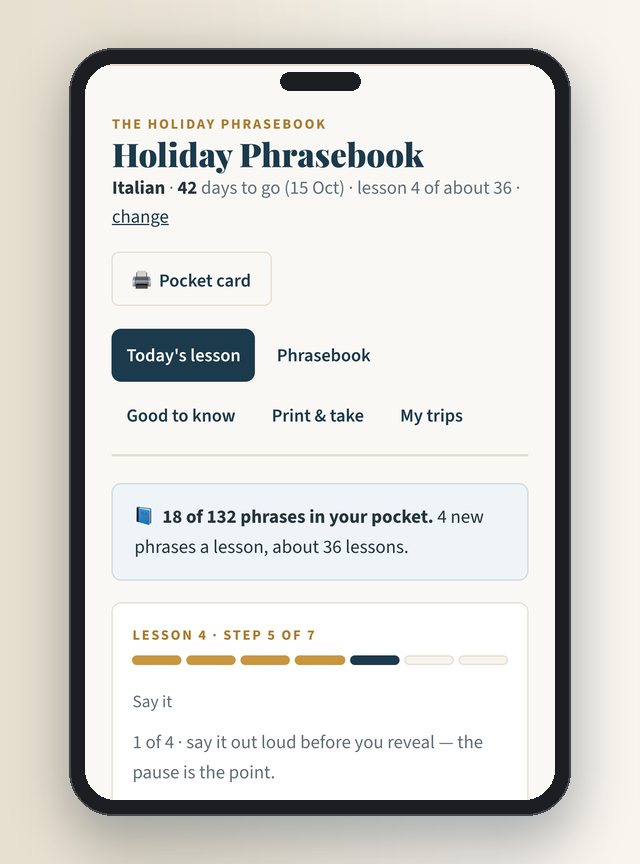
Real screens from the tool, six weeks out from an invented trip to Italy.

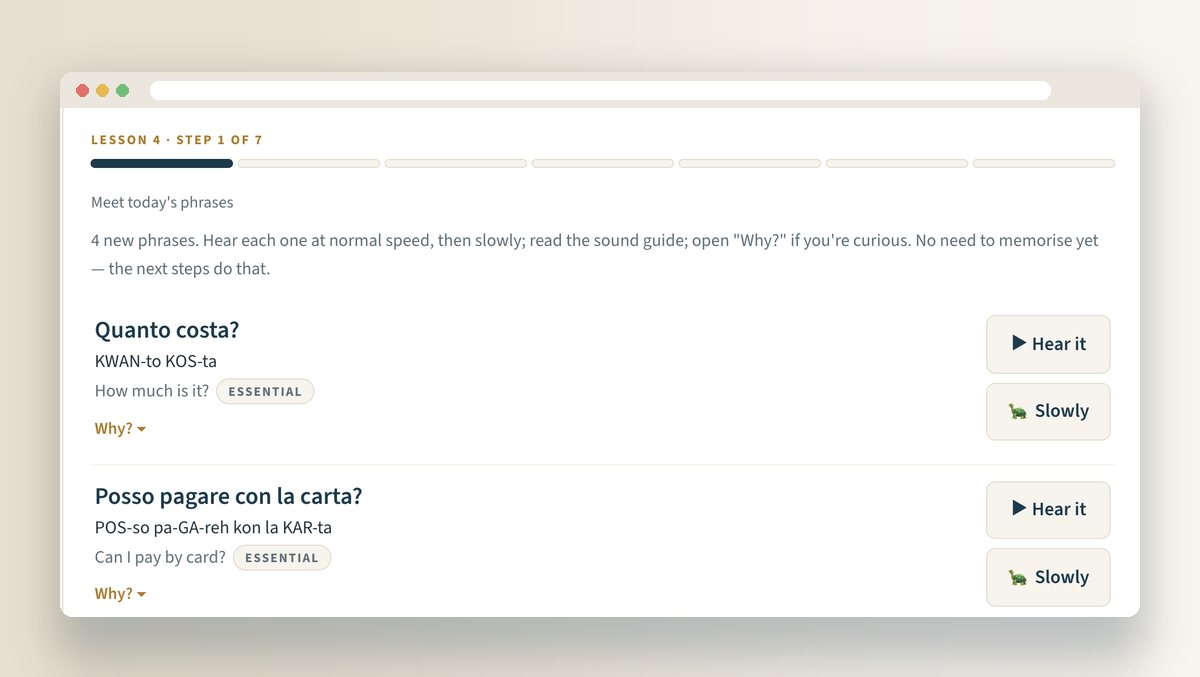
Four new phrases a lesson, each with the Italian, a plain-English sound guide ('KWAN-to KOS-ta'), what it means, and a 'Why?' note on when to use it. Hear each one at normal speed, then slowly — as many times as you like.

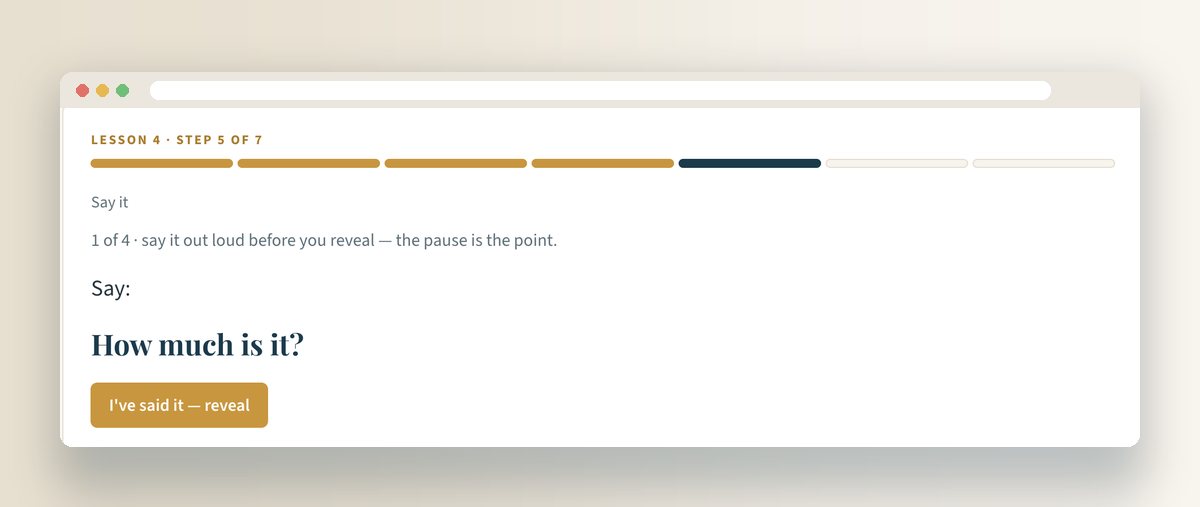
The step that actually teaches: you're shown the English, you say the Italian out loud before you reveal it, then hear it and rate yourself honestly. Phrases you know come round less often; the ones you fumble come back sooner.

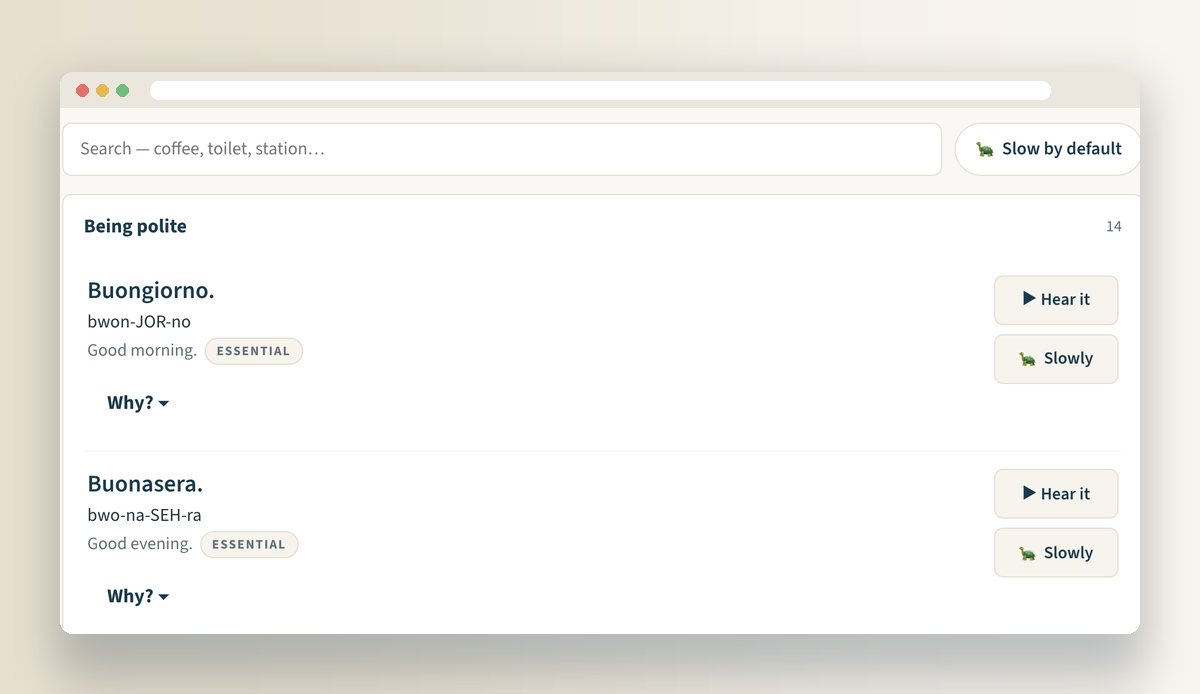
Every phrase by situation — being polite, the café, the restaurant, getting around, the hotel, shopping, health, small talk, numbers, days — with audio on each. Search for 'coffee' or 'toilet' when you need it at the table.

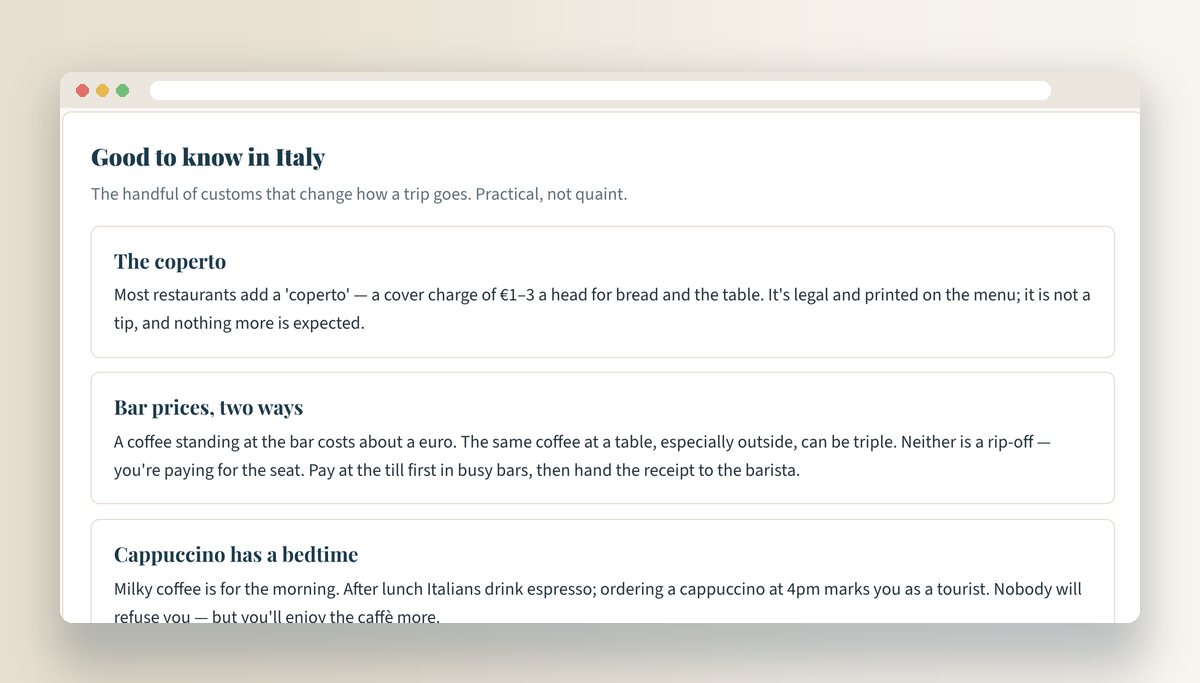
The coperto, why bar prices come two ways, why a cappuccino has a bedtime — short culture notes for each country, from people who've made the mistakes.

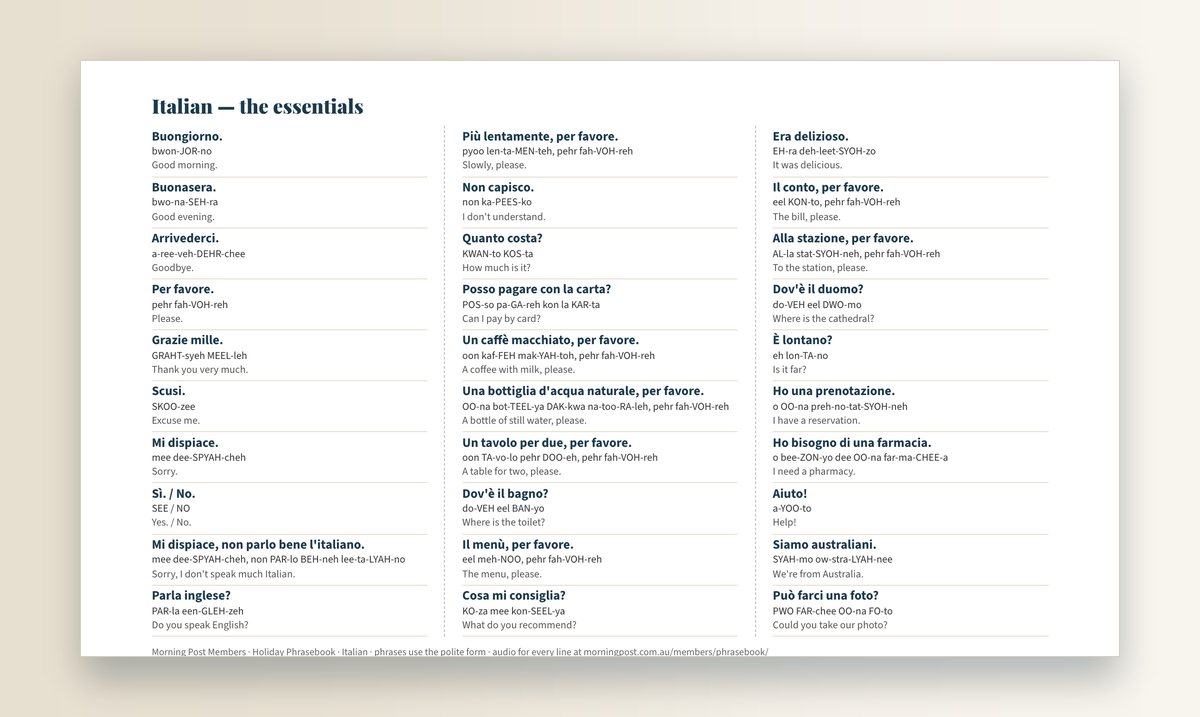
One A4 sheet, landscape, folded in three: the essentials on the front, numbers, days and emergencies on the back. Print it the night before and it lives in a jacket pocket for the whole trip.

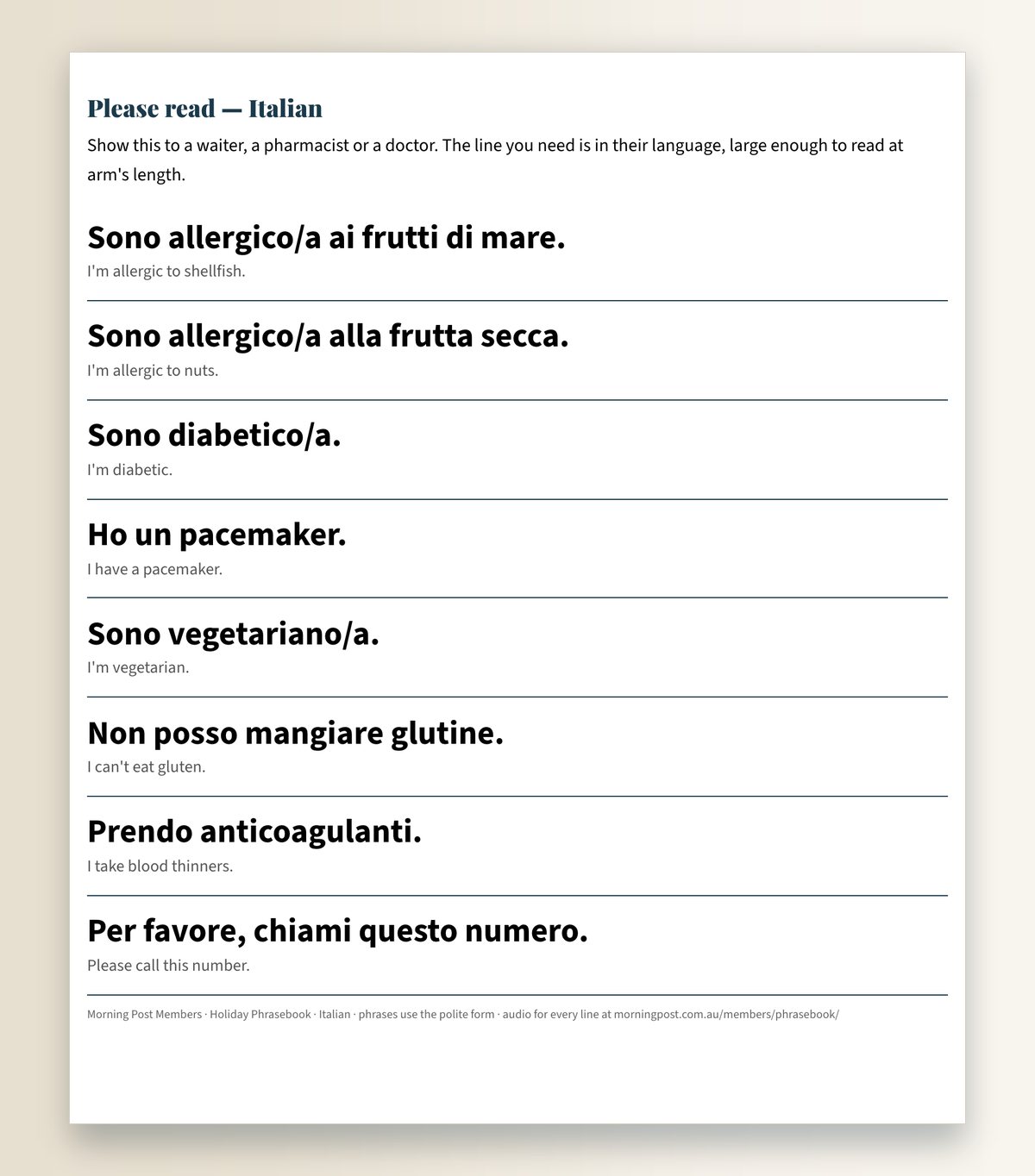
Allergies, medication, a pacemaker, 'please call this number' — eight lines in their language, 22-point type, for the moment you'd rather point than pronounce.

Every phrase plays on a tap. The lesson fits a phone screen, so the ten minutes can happen on the tram or in the waiting room.
Where you're going, when you fly, and whether you've got five or ten minutes a day. The phrasebook plans the lessons to fit — and if the trip's only a fortnight away, it concentrates on the essentials.
Hear a phrase, pick it out, build it from tiles, say it back. Phrases you know come round less often; the ones you fumble come back sooner. A week out, a quick 'ready check' shows what's stuck.
A fold-in-three card — greetings and numbers on one side, emergencies on the other — plus the full phrasebook, and a large-print 'show this' card for allergies, medication and medical needs.
Being polite, the café, the restaurant, getting around, the hotel, shopping and markets, health and emergencies, small talk, numbers and paying, days and times — plus twenty signs you'll see and need to read.
The language apps are built to keep you tapping. This is built to get you to the café. There's nothing to lose, nothing to chase, and nothing telling you off.
Every phrase carries a how-to-say-it line — 'bwon-JOR-no' — what it literally means, and a note on when to use it. You don't need to type accents or know any grammar.
Say bonjour before anything else in France. Don't tip in Japan. Which coins to keep handy for the loo. Short culture notes for each country, from people who've made the mistakes.
The point of a phrasebook is being understood when you say it. So every phrase is recorded at a natural pace and again slowly, in a native-accent voice for each language.
Hear it as a local would say it, then slowly enough to copy. Tap to play, as many times as you like — nothing autoplays.
The audio is generated from a native-accent voice and every clip is checked automatically against its text. It isn't a recording of a native speaker, and we don't pretend otherwise — it is clear, consistent and correct.
The 'show this' card puts your allergies, medications and 'I need a doctor' in 22-point type — for the moment you'd rather point than pronounce.
The Holiday Phrasebook is one of the members' tools — alongside all 18 classes, both workbooks, the four mysteries and the other tools. Language apps charge $72 a year or more; membership is $79 a year for all of it — about $550 of value, for the whole household.
Already a member? Go straight to the tool →
Italian, French, Spanish (as spoken in Spain, with notes where Latin America differs) and Japanese — about 130 phrases each — plus a shorter Indonesian courtesy pack for Bali. Greek, Vietnamese and German are the ones members are voting on next.
Yes — three of them. The pocket card (one A4 sheet, folded in three), the full phrasebook by situation, and the large-print 'show this' card all print from the tool, and printing to PDF works the same way. They're for members, so they're not on this page.
No, and it doesn't try. You'll be able to greet people, order, pay, ask for directions and help, and say thank you properly — which is what a holiday needs, and more than most travellers manage.
It's generated from a native-accent voice for each language, and every clip is machine-checked against its text so nothing ships garbled. It isn't a native speaker in a studio, and the phrasebook says so on the page rather than hide it.
No. Tell it the date and it concentrates on the essentials — greetings, numbers, the café, emergencies — instead of the full set. You'll have the pocket card either way.
Yes — phone, iPad or computer. Every phrase plays on a tap. If the phone's on silent, iPhones need the side switch flipped to hear it; the page reminds you once.